
How Bench Warrants Work in Colorado
A bench warrant is a judge's order inside a case already on the docket. Missing a court date is the classic trigger in Colorado. But the result depends on the case type and the rule that governs it. A Colorado judge can also issue one after a person ignores a release condition or another direct order. The warrant belongs to that case. It is not a new charge by itself, a default judgment, an unpaid fine, or a license notation. Court structure matters here. County Courts handle state matters within limited jurisdiction, including some misdemeanor and traffic cases. Colorado District Courts hear felonies and general-jurisdiction matters. Municipal courts take city and town ordinances plus local traffic cases. The Colorado court that issued the order controls whether it can be recalled, whether a new date is available, and what bond or other terms apply. A public listing cannot make that call. Labels vary too. Most Colorado courts say "bench warrant" or "warrant for failure to appear." "Capias pro fine" is not a general statewide label. The traffic term OJW means Outstanding Judgment/Warrant. It does not cover every warrant. That narrower statutory term applies only to certain traffic cases, not to each Colorado warrant issued after a missed date.
Colorado Traffic Warrants and Infraction Limits
A missed court date does not always bring the same result. Colorado draws one clear line. Under C.R.S. §42-4-1710(4)(b), a bench warrant may not issue solely because a person failed to appear at a state traffic-infraction hearing. For that failure, the judgment and the statutory penalty are the penalties. That limit covers state traffic infractions only. It does not settle a traffic misdemeanor, and it does not settle a city-ordinance case. The offense class printed on the citation can change the route entirely. A municipal ticket belongs in city court, while a state-law traffic matter follows a different path in Colorado. Beware of labels, too. An OJW is not shorthand for a city capias or for every warrant tied to a missed date. Read the citation closely, then ask the Colorado issuing court what order, if any, was entered.
Colorado rule: The Colorado traffic-infraction protection applies to a warrant issued solely for failure to appear at that hearing. Confirm the charge and court before relying on it.
The traffic provision lives in statute. The official Colorado Title 42 statutes publish it in full. HB21-1314 goes further. It bars that OJW as a basis to deny license issuance, renewal, or reinstatement from January 1, 2022. Other debts are different. Old Colorado entries, court debts, and separate suspensions need their own review. Note: Colorado's traffic-infraction limit does not carry over to a misdemeanor, an ordinance ticket, or any other court obligation.
Bench Warrant Issuance in Colorado
When a required appearance is missed, the Colorado court weighs the case and the law or rule that fits. If a warrant is authorized, a judge or other judicial officer with assigned authority signs the order in that case. The paper trail starts with a clerk. Colorado state-court files sit with the Clerk of Court at that location; municipal records stay with the municipal court clerk. The order may then go to a sheriff, local police, or another agency for service. Colorado sets no single filing sequence or grace period. A missed setting, a probation condition, contempt, or a release-order problem can each carry different consequences. The order may set a bond or other conditions. But no public statewide bond schedule exists in Colorado. Ask the clerk which event triggered the warrant, whether the case remains active, and what procedure the judge allows. Only the issuing court can change its own order. After issuance, the case may move through Colorado court and law-enforcement information systems. Public visibility is not assured. Colorado has no public statewide active-warrant search. A sheriff may hold the order for service. The public portal can still show nothing. A municipal court can keep a local warrant outside a county search as well. Use the notice or citation, and contact the Colorado court and the responsible agency directly.
Colorado Bench Warrants Across Courts
Court structure decides who keeps a Colorado bench-warrant record. Location matters as much as the court's name. Colorado County and District Court files are handled by the respective Clerk of Court, and city courts keep their own municipal records. Magistrates act under assigned authority. They form no separate tier of Colorado courts. A Colorado county directory helps when the case papers lack a usable contact. It can point you to the local court and sheriff.
| Court tier | Common case area | Bench-warrant route |
|---|---|---|
| Colorado District Court | Felony criminal and general-jurisdiction matters | Contact the Clerk of Court at the district location on the case. |
| Colorado County Court | Misdemeanor, eligible traffic, and limited matters | Ask the Colorado county-court clerk about the order and case-specific rules. |
| Municipal Court | City or town ordinance and local traffic cases | Contact the issuing municipal clerk and local service agency. |
| Federal District Court | Federal criminal or civil cases | Use the U.S. District Court clerk and federal process; state county lists do not clear it. |
Colorado spreads its courts across 22 judicial districts and 64 counties. There is no statewide count of municipal courts in the official Colorado materials. Each level keeps its own warrant records. Denver County Court runs separately, with a local bond and warrant division for its own cases. It offers no portal covering other Colorado courts. The blank municipal warrant portal is a city-level tool: type a name and date of birth, and it answers only for that one court's ordinance cases.
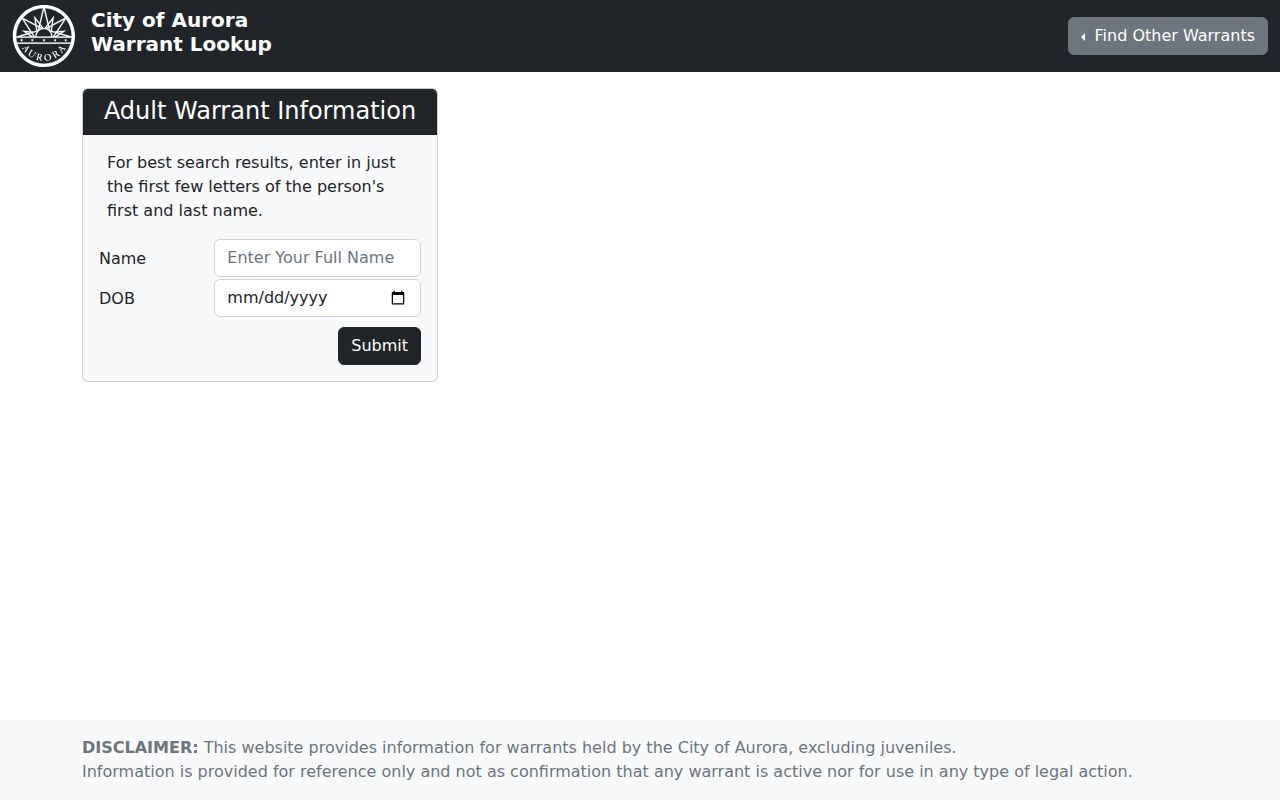
A city portal covers only its own ordinance cases. For Colorado state-law charges outside that court's jurisdiction, check with the state court where the case was filed.
How Bench and Arrest Warrants Differ
Both orders come from a court, but they start in different places. A Colorado bench warrant grows out of an existing case, usually after a missed appearance or another court-directed basis. An arrest warrant is different. Colorado issues it through a probable-cause process in a criminal matter. The judicial officer signs under that case's authority, and the service agency follows the order. The label alone won't tell you its current status or the next court date.
| Feature | Bench warrant | Arrest warrant |
|---|---|---|
| Common basis | Missed court obligation or another pending-case issue | Probable cause in a criminal investigation or filed matter |
| Case relationship | Usually tied to a case already before the court | May begin the process of bringing a person before court on a criminal matter |
| Issuing authority | Judge or authorized judicial officer in that case | Judge or magistrate under the applicable probable-cause process |
| Resolution control | Issuing court decides recall, appearance, or bond terms | Issuing court controls the order; the case may require counsel and a separate appearance plan |
Colorado's line between them is about the source and purpose of the order. It promises nothing about how an officer acts in a specific encounter. A bench warrant adds no new charge. Posting bond doesn't dismiss the underlying case either. Before acting on either order, confirm the Colorado court, the service agency, the bond, and the required next date.
A Calendar Cannot Confirm Current Status
The Colorado Judicial docket is a public court calendar, searchable by location, date, case, party, or attorney, and a warrant-linked event may appear there. It is not an active-warrant database. A hearing entry doesn't prove the order is still open. An empty calendar doesn't prove none exists. Use a docket hit to find the Colorado court and case, then ask the clerk for the current record. A Colorado sheriff's page has limits too. Some Colorado counties post a name-search form. Others tell you to call a warrant unit. City courts keep municipal matters separate. Colorado's information exchange stays restricted, and the public has no complete statewide index. The Colorado Judicial access guide explains how to request a court record from the filing court; the serving agency separately confirms service and surrender details.
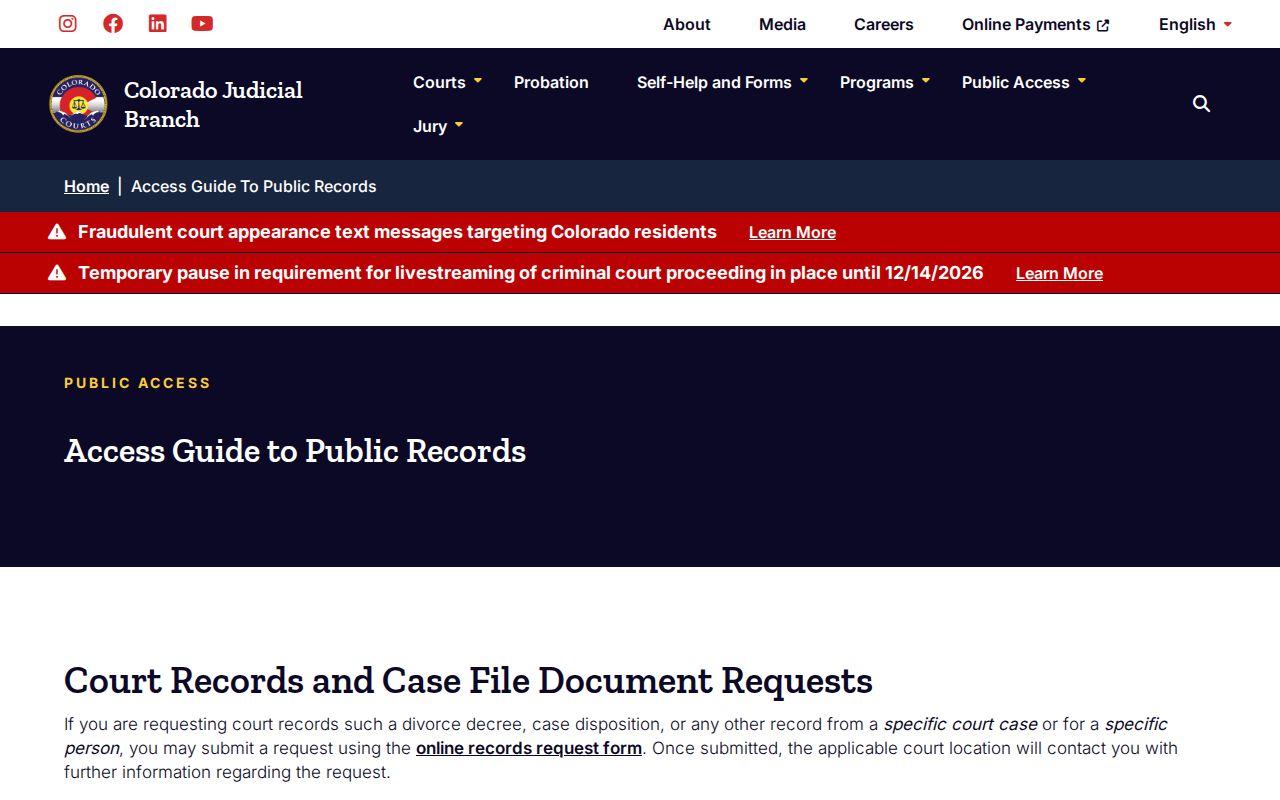
Court access has limits. A Colorado calendar event isn't a warrant list. A docket entry, sheriff list, or old notice can still point you to the right case. Only the current custodian can confirm the order and the next step. Request the case record from the issuing court. Then confirm current status with the agency responsible for serving it.
Clearing a Bench Warrant in Colorado
Start with the Colorado court that issued the bench warrant. Ask if it's still in effect. Ask why it was entered. Find out whether the judge will allow a new appearance date or a motion to recall or quash, and whether bond has been set. A recall or quash asks the issuing court to withdraw or set aside its order. There is no universal Colorado motion form for every county and city. The clerk can explain the filing steps. But the clerk cannot advise which legal choice to make.
- Use the citation, notice, case number, or official court location service to identify the correct Colorado court and case type.
- Call the Colorado clerk to confirm status, the triggering event, bond terms, and whether an appearance, motion, or reset can be requested.
- Ask the Colorado sheriff, police, or other service agency whether it holds the order and what surrender or booking steps apply.
- Follow the Colorado court-authorized route, then keep the signed order, receipt, bond paperwork, or new date and verify that the record was updated.
Caution: Colorado has no general automatic expiration period for a warrant. Confirm a recall or service directly with the issuing court and responsible agency.
Colorado Bench Warrant Bond and Recall
Bond secures release and a promise to appear. It doesn't dismiss the charge or replace a required court date. The Colorado court sets release terms for the case. Public records may not show the bond amount. Cash, surety, and personal-recognizance bonds each carry different terms. Ask the Colorado court or the authorized jail or bond office which forms and payment methods it accepts. No statewide Colorado warrant bond schedule exists. A motion to recall or quash is a request for Colorado court action. Paying a fine or setting up a payment plan may address the underlying obligation only if the court authorizes it. Payment alone may not remove a separate warrant or resolve a charge. If the judge requires surrender, plan the details first. Confirm the location, hours, identification, and booking steps. Ask whether a court appearance follows the booking. For a planned surrender, the Colorado court and the serving agency give the instructions for that case. Denver County Court has its own local Bonding & Warrants Division. It handles its own matters, and its official division description is a local example, not a statewide Colorado rule. Don't confuse that Denver office with the Colorado state court clerk or another county's sheriff. Confirm the issuing court before using any local bond portal or contact path.
Colorado Courts That Issue Bench Warrants
A Colorado bench warrant belongs to the court and case that created it. That is where any Colorado lookup starts. Match the paperwork in hand. A citation points to a municipal court, a Colorado state court summons points to a County or District Court case, and federal papers point to a federal matter. A calendar entry that lists only a hearing event still helps. Use its case number and court location to reach the clerk. The Colorado court can also say whether a Colorado sheriff or another service agency needs a call too. State-court cases run through Colorado's unified court structure. In Colorado, each court location has a Clerk of Court rather than separate district-clerk and county-clerk offices. Municipal courts keep their own city-case records. Use Browse Counties for the Colorado county route, and the Colorado Judicial court-location list to find the state courthouse and its clerk. For a city matter, the municipal court named on the citation is still the first stop. A Colorado court-record request can obtain the order or docket when it is not posted online. A Colorado criminal-justice record held by a sheriff goes to that sheriff's CCJRA custodian. Neither request recalls the warrant. Only the issuing Colorado court can. Ask the Colorado court what next action satisfies its order, and keep a written copy of the decision or the new appearance date.
Colorado Bench-Warrant Clearance Events
Colorado runs no standing statewide warrant-amnesty week. There is no uniform clearance program either. Colorado Judicial districts and counties sometimes announce a local day for eligible cases, and each notice controls its own dates, case classes, exclusions, and court location. A Colorado event may recall an eligible warrant or set a new appearance date without resolving the underlying charge. Past eligibility does not carry over to a later one. The 5th Judicial District announced a Summit County Combined Courts clearance event for September 19, 2026. That Colorado date has passed. Colorado Judicial also announced Denver-metro warrant-clearance days in April and May 2026. Those dates are gone too. Both announcements described district-specific eligibility and exclusions, so an old notice cannot confirm a current Colorado case is eligible. Before attending any future event, check the current Colorado Judicial press-release archive and confirm with the issuing Colorado court. When a new notice appears, ask the Colorado court whether the case qualifies, what identification is needed, whether counsel must appear, whether a bond or fee remains due, and whether the event sets another hearing. No event applies? Then the usual route is a direct call to the Colorado issuing court and its service agency about a motion, an appearance, bond, or a coordinated surrender.