
Colorado Traffic Infractions Have a Narrow FTA Rule
Colorado draws a sharp line between a state traffic infraction and other case types. Under C.R.S. §42-4-1710(4)(b), a court may not issue a bench warrant just because someone missed a hearing on a Colorado state traffic infraction. The statute names judgment and the prescribed penalty as the consequences instead. That is not a free pass. The infraction case itself still stands. The rule is narrow, too. It does not reach a traffic misdemeanor, a city ordinance ticket, a criminal charge, probation, contempt, or any separate order a Colorado court has issued. So read the citation closely. It tells you the offense class and the court. Ask the clerk if the label is unclear. One roadway incident in Colorado can land in different courts depending on what was filed.
Colorado rule: the no-bench-warrant provision applies to FTA at a state traffic-infraction hearing only; do not extend it to misdemeanors or municipal cases.
How Traffic Warrants Work in Colorado
A Colorado traffic warrant is tied to one citation or case. It is not a statewide entry on a driver history. An unpaid ticket or a missed court date can bring judgment, penalties, or collections. None of that guarantees a warrant exists. Offense class, payment history, and current Colorado law all matter. So treat a state infraction, a misdemeanor, and a Colorado municipal ordinance matter as separate categories. The citation itself is the best place to start in any Colorado traffic case. It names the issuing court and the case type. State-law traffic cases may be heard in Colorado County Court. A city ordinance matter belongs to the Colorado municipal court that filed it. In Colorado, the warrant and any bond or recall decision stay with the issuing court. The Colorado sheriff or local police agency assigned to serve the order may confirm whether it holds a copy. Either way, the court remains the place to ask.
Colorado’s $30 OJW Is a Court Fee
OJW stands for Outstanding Judgment/Warrant. In Colorado it lives in the traffic and driver-license corner of the law. The current fee table from Colorado Judicial lists a $30 OJW fee under those motor-vehicle statutes. That figure is one court fee, nothing more. It is not a statewide warrant search charge, not a bond, and not a DMV fee. Nor is it a flat price to clear every warrant in Colorado. A case can carry other fines and costs on top. A city in Colorado may also set its own local amounts. The Colorado Judicial fee schedule publishes the OJW line itself, label and all. Read that label closely so the $30 is not mistaken for a general warrant or license-clearance price. Ask the Colorado issuing court whether the fee applies to your case and what else is still due. The table does not establish warrant status or show a personal balance, and paying it alone does not recall an order.
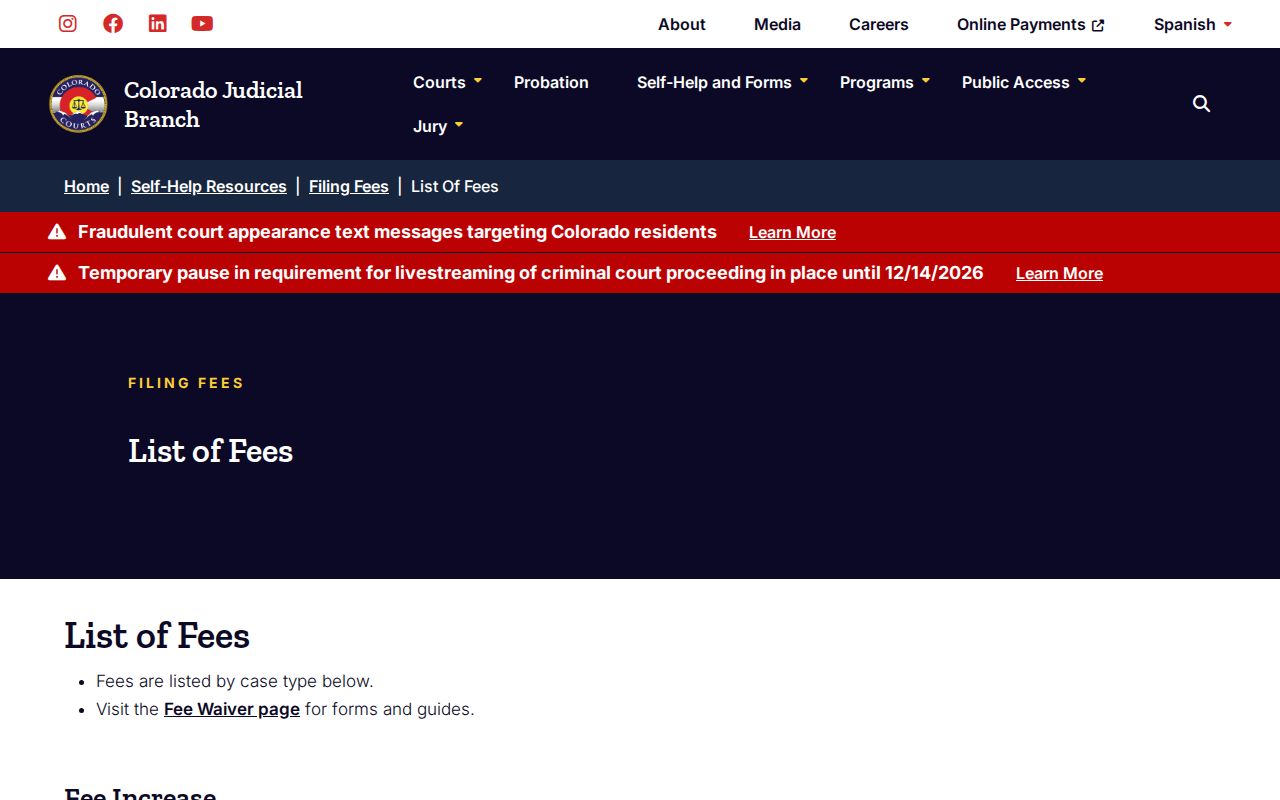
Colorado's $30 entry is narrow and statutory. Ask the Colorado court to itemize any other balance and say whether a separate appearance is required.
| Item | What the Research Supports | Where to Confirm |
|---|---|---|
| OJW fee | $30 on the Judicial fee table under specified statutes; not a universal warrant fee. | Colorado issuing court and current fee schedule. |
| Bond | Case-specific; no public statewide warrant-bond schedule was verified. | Colorado court or authorized jail bond office. |
| Municipal amount | No uniform statewide warrant or clearance charge was found. | Colorado municipal court. |
How Colorado Handles FTA and License-Hold Systems
Colorado has no public statewide failure-to-appear or license-hold portal. No county selector or license query answers warrant status. Restricted Colorado law-enforcement systems are not public warrant searches either. The OJW fee label from Colorado law builds no lookup program. So a traffic warrant check starts with the court named on the citation. That Colorado court is where the record lives. The public route runs through calendars and records requests that Colorado Judicial publishes. The underlying case still sits with the Colorado filing court. A Colorado county sheriff may post a warrant search or take questions by phone, though coverage varies. Colorado CBI's criminal-history FAQ makes the limit plain. Its check does not determine warrant status. The FAQ points readers to the issuing agency.
| Channel | What It Holds or Shows | Who Runs It |
|---|---|---|
| Public statewide FTA or license-hold search | No public Colorado lookup was identified. | No single public program identified. |
| Traffic case and court order | Citation, case events, and official warrant or judgment record, subject to access rules. | Issuing Colorado County Court or Colorado municipal court. |
| County sheriff warrant channel | Orders the sheriff holds or publishes; online fields and freshness vary. | Each Colorado county sheriff independently. |
Colorado Traffic Warrants Are Not Automatic
A missed traffic date does not guarantee a warrant. Colorado draws a sharp line between infractions and misdemeanors. For a Colorado state infraction, §42-4-1710(4)(b) bars a bench warrant based only on a missed hearing. The Colorado court can still enter judgment and apply the statutory penalty. Colorado traffic misdemeanors and municipal ordinance cases follow other rules. Never assume the infraction protection carries over. Older advice about traffic failure to appear and license suspension also goes stale, since HB21-1314 took effect in Colorado on January 1, 2022. That act bars using the specified OJW to deny license issuance, renewal, or reinstatement. It did not dismiss the traffic case. It canceled no warrant, cleared no balance, and did not stop a separate Colorado license action for another reason. Ask the Colorado court about the case. Ask the Colorado motor-vehicle office about any record question. Note: a Colorado OJW notation, a court warrant, and a traffic judgment are three different records.
Colorado Traffic Warrant Checks
Colorado offers no single statewide traffic-warrant search. The court named on the ticket holds the case file and any order, so that clerk is the place to start. The agency assigned to serve the warrant in Colorado can confirm it separately. A Colorado Judicial calendar shows hearing dates, not warrant status, so treat it as a calendar only. For an official document you cannot pull up directly, file the Judicial Record/Document Request Form. Records may arrive that way. The order itself stays in place until the court acts.
- Read the Colorado citation for the court, city or county, offense type, case or citation number, and appearance date.
- For a state-law case, contact the Colorado County Court or use the Colorado Judicial docket calendar to locate a hearing event. A docket entry alone does not prove a current warrant.
- For a city ordinance ticket, contact the named Colorado municipal court. If the sheriff may hold the order for service, use that Colorado county’s public search or warrant-unit phone channel.
- Use Browse Counties for state-court and sheriff routing. For wider warrant-search channels, see Warrant Check.
- Ask the Colorado court clerk whether a warrant exists, what the current balance is, and whether an appearance, motion, payment, or bond is required.
Each Colorado tool answers one question. A CBI criminal-history response, a hearing calendar, and a license record are not warrant confirmations. Only the issuing court settles that.
HB21-1314 Changed a Colorado License Rule
One Colorado license rule changed on January 1, 2022. HB21-1314 limits how a specified Outstanding Judgment/Warrant can touch a Colorado license. Under the act, that OJW cannot be the reason to deny issuance, renewal, or reinstatement. That is all it does. The change is not a public FTA portal for Colorado, and it is not a court order recalling an outstanding warrant. The underlying case may still demand a response. An old Colorado OJW in a driver record still deserves a call to the court that reported it, plus a question to the motor-vehicle office about that record. A legacy entry is not automatically an active arrest warrant. The 2022 change paid no fine and closed no case. Keep the court receipt, and ask each office when its record should update.
Clearing a Traffic Warrant in Colorado
Colorado sets no statewide payment page and no uniform fee for clearing a traffic warrant. Confirm the order and the amount with the issuing court first. What happens next depends on the charge and the case. The court may want payment, a hearing, a motion to recall, bond, or some other step. Paying a fine, or the $30 OJW fee, does not by itself recall an unrelated warrant. For a sense of how one court handles this, El Paso County Court Collections posts its own payment and OJW contact instructions. That page covers El Paso County only. Other Colorado courts run their own collections, so the El Paso route is one local example.
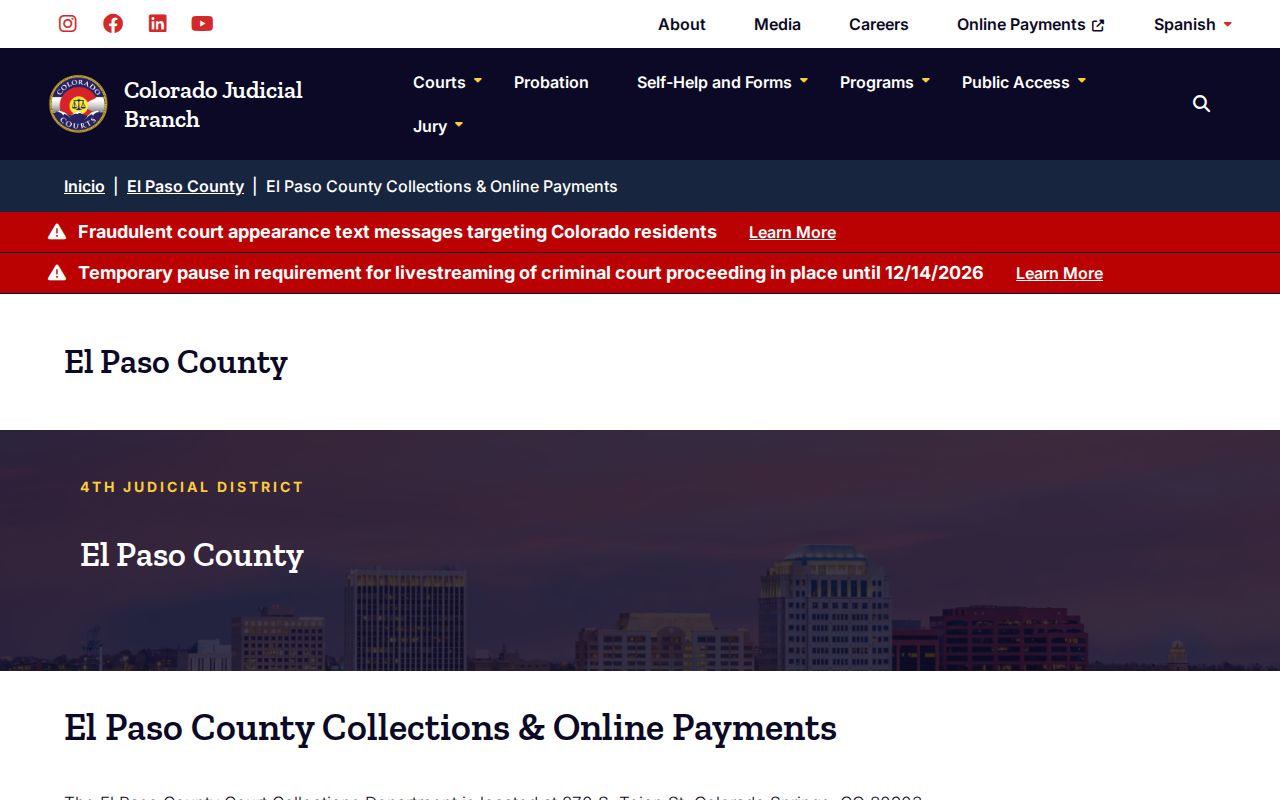
Colorado courts clear traffic warrants through the court that issued them. A local El Paso payment route handles the money side. Only the issuing court can confirm status or recall the order, so ask what still remains in the case.
- Ask the issuing court whether the case is an infraction, misdemeanor, or municipal ordinance matter and whether a warrant is active.
- Confirm the current amount, accepted payment route, and whether the court also requires an appearance or motion.
- If a warrant exists, ask what action recalls it and whether bond or a new court date is needed.
- Keep the receipt or signed order, then confirm with the clerk that the case status changed.
Caution: Colorado has no statewide traffic-warrant clearance process; only the issuing court can explain whether payment, a hearing, or a motion resolves the order.
For a state-court location, the Colorado county directory lists them by county. A municipal citation goes to the city court named on the ticket.
Colorado’s Aurora Portal Is Municipal-Only
Aurora runs one example of a municipal warrant portal. The search asks for a name and date of birth, and typing the first few letters of both names tends to work better. It covers Aurora municipal matters only. The portal is not a statewide Colorado warrant search, it does not reach state-law traffic cases from other cities, and juvenile matters are excluded. Results come with a reference-information caution, and the portal points users to Aurora Municipal Court to verify. That local scope matters. A state traffic offense can be filed in a County Court, while a city ordinance citation belongs to the city court printed on the paper. A blank Aurora result cannot clear a case another court holds. For an Aurora citation, use the official city court; for any other Colorado ticket, use the county and court on the paper. Note: An Aurora portal result is only an Aurora municipal record and should not be read as statewide status.
Colorado Traffic Warrant or Driver Record
A Colorado traffic warrant is court process tied to one case. A driver record is a different product. The motor-vehicle agency keeps it, and it speaks to license status and driving history. Knowing the difference helps you find which office holds the traffic-case record. It does not turn a warrant check into a driver-history product. To confirm a warrant, ask the court that handled the citation.
| Feature | Traffic Warrant | Driver Record |
|---|---|---|
| Record type | Court order or case entry tied to a citation. | Motor-vehicle record kept by the state agency. |
| Custodian | Issuing County Court or municipal court. | Colorado motor-vehicle agency. |
| How it changes | Court action, such as recall, appearance, or case resolution. | Separate agency update under the rules for that record. |
| Warrant confirmation | Ask the issuing court and, for service details, assigned agency. | Does not establish whether a court warrant is outstanding. |
A Colorado traffic case lives in more than one system. The court file is separate from the motor-vehicle record the state keeps. Ask each office how it updates its own file.