
How Municipal Warrants Work in Colorado
Municipal warrants grow out of cases in Colorado city or town courts. Not everything inside city limits qualifies. An ordinance citation stays in the Colorado municipal court system. A state misdemeanor or traffic charge may instead be filed in Colorado County Court. A felony generally follows the Colorado District Court route. Read the court name and case number on the Colorado citation before you request any record. The Colorado city court controls the order and the steps to address it. A warrant can follow a missed required appearance or another court-directed basis. Procedures still depend on the offense and local rule. Colorado has no public statewide warrant search that gathers all municipal cases. A local portal, where one exists, covers only the court or city it names. The Colorado municipal clerk can confirm whether a record is available. That office also knows which local agency in Colorado handles service.
Colorado Municipal Warrants Can Miss Sheriff Lists
A Colorado county sheriff's public warrant page covers only that office's own records or its published list. A Colorado municipal warrant that remains in a city court may not appear there at all. It can sit in the local police system instead. Colorado does run a statewide justice-information exchange, but that system serves authorized agencies only. Public Colorado material does not show whether all municipal courts participate uniformly. It also omits which warrant classes are included and when data changes reach each system. An empty Colorado county search settles little. It cannot settle a Colorado city-court question, nor prove a municipal warrant absent from every restricted law-enforcement system. Contact the issuing municipal clerk first. Then ask the Colorado city police or marshal channel about service if that matters. State-court cases run separately. The Colorado county court and sheriff keep different records. The Colorado county directory routes that separate inquiry. Colorado has no public statewide active-warrant query, and no public list promises complete municipal coverage.
Municipal vs County Warrants in Colorado
Municipal and state-court warrants differ in more than name. Charges, clerks, service agencies, and public search tools can all change between them. In Colorado, the split is easy to state. A Colorado municipal court handles its own ordinance case. A state-law case goes to the right Colorado County or District Court. The public label "county warrant" can also mean a sheriff's service list. That is not the Colorado court's full docket.
| Feature | Municipal Court Warrant | State-Court Warrant |
|---|---|---|
| Issuing record | Colorado city or town ordinance case and municipal court order. | Colorado County or District Court case under state law. |
| Records office | Clerk of the issuing Colorado municipal court. | Clerk of Court for the filing Colorado County or District Court. |
| Service channel | Colorado local police, city marshal, or other local arrangement. | Colorado county sheriff or another assigned authorized agency. |
| Public visibility | A Colorado city portal may exist; no statewide public list is verified. | Colorado county sheriff channels vary; a court calendar is not a full active-warrant index. |
| Where to resolve | The Colorado city court that issued the order. | The issuing state court, with service details from the assigned agency. |
Neither column captures every Colorado court's local process. Confirm the court on the case instead of treating the sheriff list and the court record as one and the same.
Aurora’s Municipal Search Covers Aurora Matters
Aurora offers one example of a local Colorado municipal warrant portal. The form wants a name and birth date. Typing the first few letters of both names can help return a match. The portal covers Aurora municipal matters in Colorado only. Juveniles are excluded. It also posts a warning that results are reference information to be checked with the court. It is no statewide Colorado or metro-area warrant list. The Aurora municipal warrant portal presents a blank search form, with public fields and no submitted name or case result.
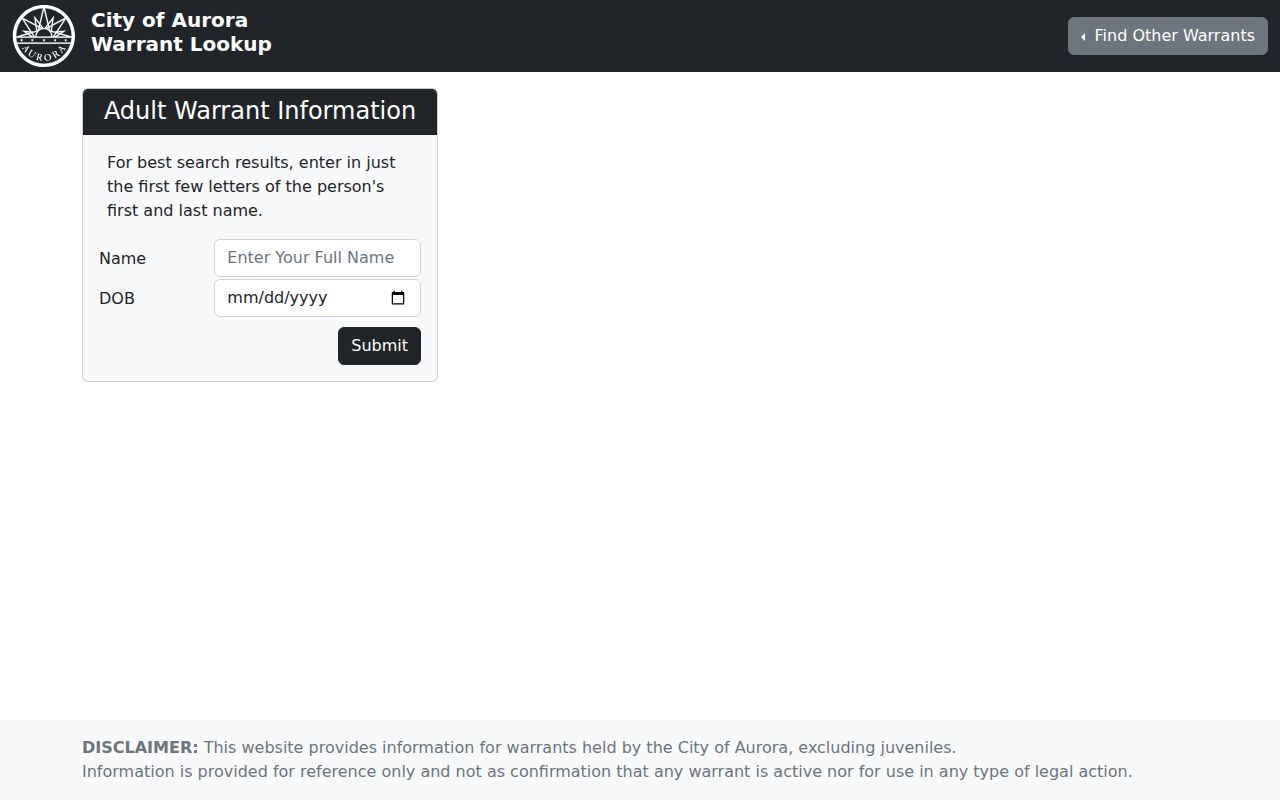
A Colorado resident holding an Aurora ordinance citation can verify it with Aurora Municipal Court in Colorado. A state offense does not fit there. Another Colorado city's ticket needs its own court too. Both rules hold even in the same region. That local scope is why a city-court check cannot be replaced by any countywide or statewide Colorado search.
Colorado Municipal Warrant Checks
Pull out the Colorado city and court named on the citation, summons, or case paper before anything else. That city court keeps the municipal case, and its clerk can tell you whether an online warrant lookup exists, what details it accepts, and how to request the file. A docket calendar only lists hearing events, so treat it as a schedule rather than a warrant-status list. The Colorado Judicial record request form covers state-court records. It cannot replace the Colorado municipal court's own process for a city warrant check.
- Identify whether the case is a Colorado city ordinance matter or a state-law Colorado County or District Court case.
- For a municipal matter, use the Colorado city court’s official portal if available, then call the clerk to confirm current status.
- Ask the Colorado municipal police or marshal contact whether that agency holds the order for service; do not assume the county sheriff does.
- For a Colorado state-court alternative, use Browse Counties to locate the courthouse and county sheriff channel.
- If no official result is available, ask the correct records custodian how to request the court or law-enforcement record.
The CBI criminal-history FAQ states plainly that its record check does not provide warrant status. A CBI result will not settle whether a Colorado municipal warrant is open. Denver County Court's public portal lays out local case and payment tools, including a limited online bond option. That bond feature is a Denver example within Colorado only. Not every warrant qualifies for online bond, and the portal is not a statewide municipal-warrant search.
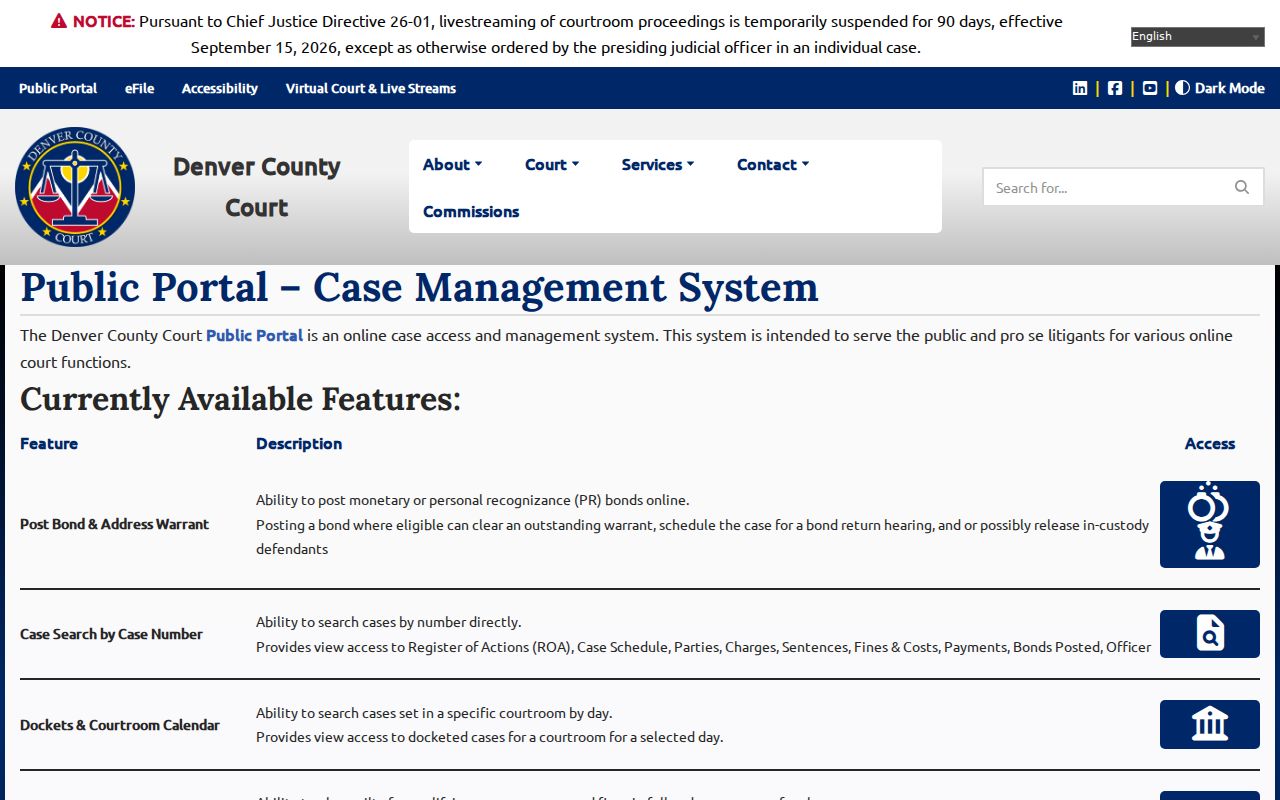
The portal's local reach points to the same move: name the court, then ask it directly which payment or service route fits the Colorado case.
Colorado City Police and Sheriffs Differ
A Colorado municipal court keeps its own case file, and the agency that serves the warrant depends on local assignment rather than any statewide rule. City police or a marshal may serve an ordinance warrant. A county sheriff may hold or serve other warrants within its own scope. Colorado sets no rule that turns every municipal order into a sheriff record. Ask the clerk which agency received the order, then ask that agency about service or surrender. Colorado's statewide exchange moves information between courts and justice agencies, but no public source charts city-by-city participation or a universal sync time. That gap explains why a court entry, a police record, and a county sheriff warrant search may not update at once. The issuing city court stays the authority over recalling its own order, no matter which agency serves it. Note: A sheriff can say what its office holds; only the issuing Colorado court can change the municipal warrant.
Municipal Warrants: What They Show
Colorado uses no single municipal-warrant format or statewide status-code list. One city portal may show only a name match and a phone number, while the court file holds a fuller docket and order. The fields described next are common elements worth asking about, not a promise that every city posts them online. No statewide municipal warrant-number format exists.
| Case number | Identifies the municipal docket; include it in a request if the citation provides one. |
|---|---|
| Person details | Name and, where collected, date of birth can help separate similar names. |
| Offense | May identify the city ordinance or local traffic matter tied to the case. |
| Issuing court | The city or town court that entered the order; verify its name and case location. |
| Bond or amount due | May be set by the court and can require direct confirmation before payment. |
| Status or service | A local record may show service, recall, or another update; labels are not uniform statewide. |
A public portal can limit results by age, case type, or local access rules. If a Colorado field is missing, ask the municipal clerk what the official file contains.
Colorado Municipal Records Belong to City Courts
For a Colorado municipal court docket, order, or disposition, start with the city court that filed the case. The Colorado Judicial public-access directive governs state-court records; municipal access may follow the city's own process and applicable law. A record request asks for an existing document or an access decision. It does not ask a judge to recall a warrant or set a new hearing date. Criminal justice records held by a police or sheriff agency fall under the Colorado Criminal Justice Records Act, while many general state and local agency records sit under the Colorado Open Records Act, subject to limits. For an order or docket, contact the issuing court; for an agency-held service record, ask that agency's records custodian. Do not send a municipal-court record request to CBI as a warrant check. The Colorado CBI FAQ says its criminal-history product cannot determine warrant status and points users back to the issuing agency. A city clerk, a local service agency, and CBI each answer a different question. If a custodian withholds a record, ask which rule applies and what review path is open.
Clearing a Municipal Warrant in Colorado
The Colorado municipal court that issued the order decides how it can be resolved. Options may include appearing, asking for a new date, filing a motion to recall or quash, posting a court-set bond, paying the underlying fine, or using a court-approved payment arrangement. What applies depends on the case and local rules. No statewide municipal warrant fee, bond amount, or recall form exists.
- Call the issuing city court to confirm the case, warrant status, amount due, and any appearance requirement.
- Ask whether the judge will consider a recall motion or new date and how the filing must be made.
- Confirm with the local police or marshal whether the agency holds the order and how any surrender is arranged.
- Follow the court’s stated payment or bond route, keep the receipt or signed order, and verify the update with the clerk.
Caution: Paying a Colorado municipal fine does not always recall the warrant; confirm the court’s action and keep proof of the order or payment.
A records request alone does not clear an active order. If the Colorado city court confirms a warrant and the next step seems unclear, consider talking with a lawyer before you appear or arrange a surrender.